
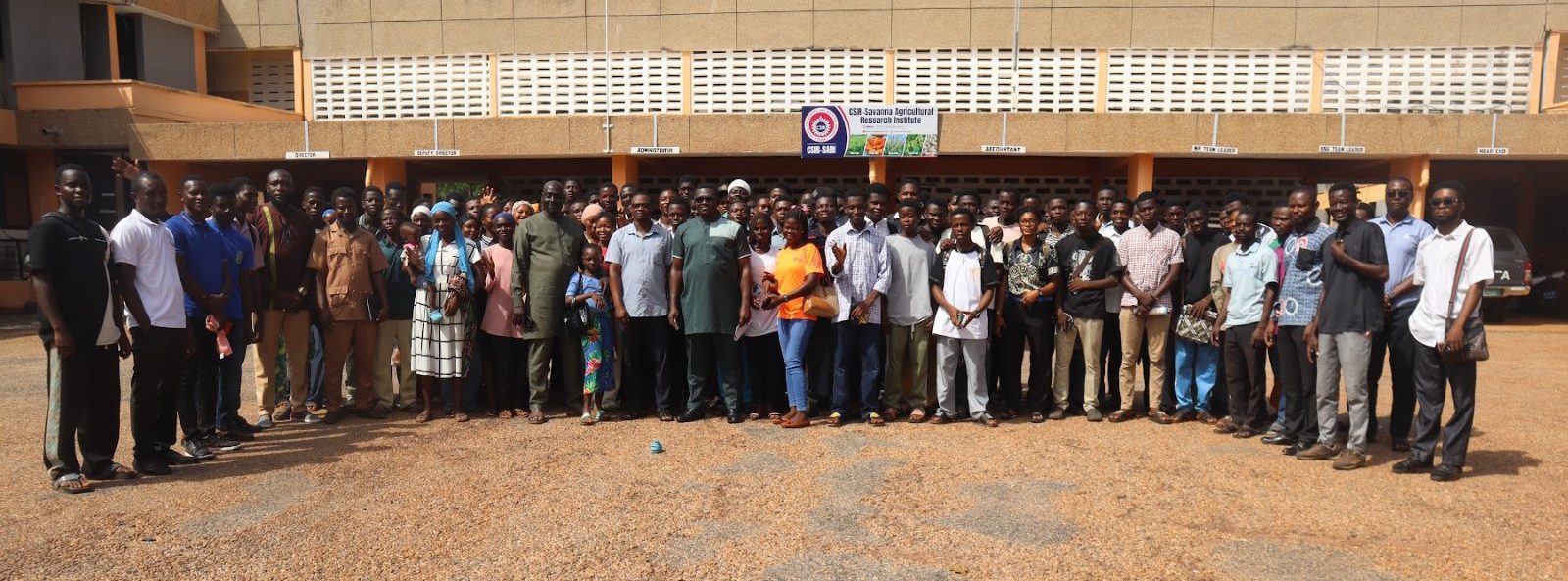
Nyankpala, Nov. 11 – Students of the University for Development Studies (UDS) have toured the laboratories of the CSIR-Savanna Agricultural Research Institute (CSIR-SARI) at Nyankpala to see how agricultural research is carried out in practice.
The three-hour educational visit was aimed at linking what the students learn in the classroom with real laboratory work, equipment and technologies used to tackle farming challenges in northern Ghana.
The students were received by the Deputy Director of CSIR-SARI and heads of the Institute’s laboratory sections. They were then split into smaller groups and taken round five laboratories: Biotechnology, Soil Microbiology/Inoculant, Plant Pathology, Soil Chemistry and Plant Tissue Culture.
Inside the laboratories
At the Plant Pathology Laboratory, Dr Salim Lamini, who heads the section, explained that diagnostics is a major part of the laboratory’s work. Staff identify and investigate plant diseases and related problems, a step that is central to protecting crops and guiding research.
Dr Fredrick Awuku, Head of the Biotechnology Laboratory, introduced the students to some of the section’s equipment, including an oven, a bead mill and a water bath, and explained how each supports biotechnology research.
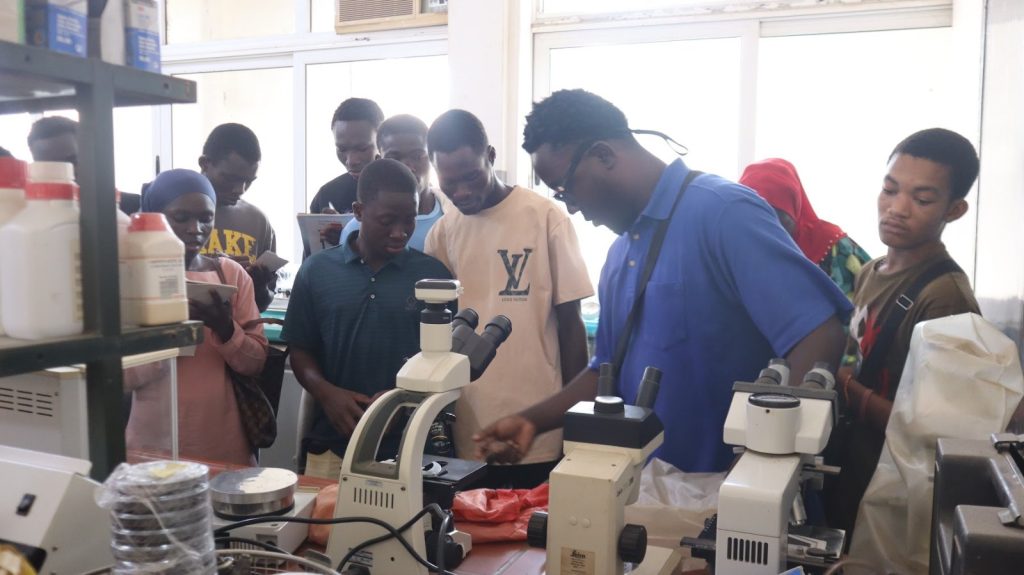
At the Plant Tissue Culture Laboratory, Dr Kwabena Darkwa took the students through yam tissue culture, showing how laboratory techniques are used to propagate clean planting material for yam research and for farmers.
The students also visited the Soil Microbiology/Inoculant Laboratory and the Soil Chemistry Laboratory, where they learnt about the Institute’s soil-related research.
Questions, answers and career ideas
At each stop, the students asked questions and explored areas of interest with the scientists and technical staff. The interactions introduced them to concepts and technologies they had little or no knowledge of before, and opened their eyes to possible research and career paths.
The visit deepened the students’ understanding of the role of biotechnology, plant pathology, tissue culture and soil science in agricultural development, and gave them direct contact with experienced researchers.
CSIR-SARI regularly hosts students from universities and technical institutions as part of its mandate to share knowledge, transfer technologies and build capacity for agricultural development in Ghana.
Leave a Reply