
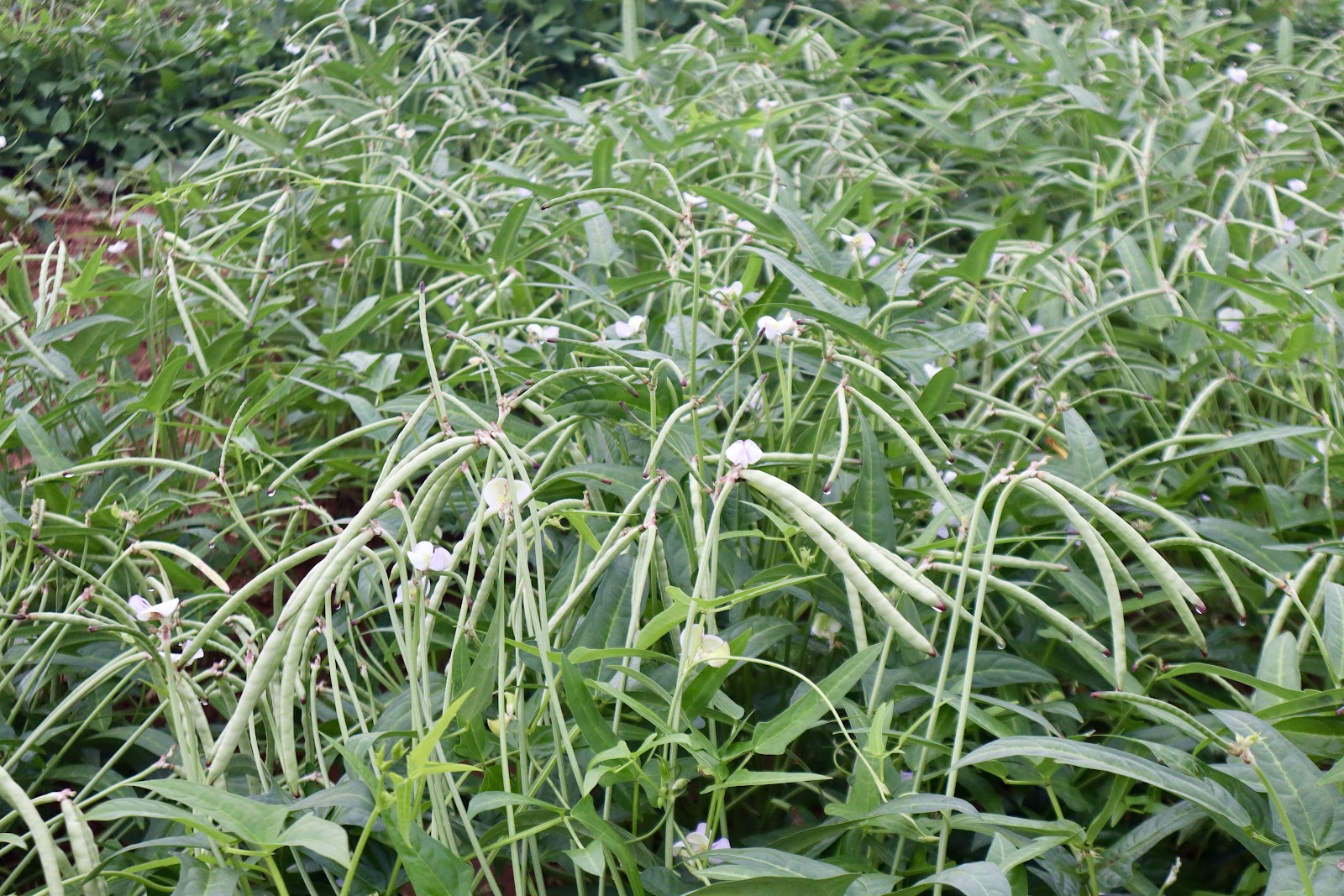
Nyankpala, Nov. 18 – Field research by scientists of the CSIR-Savanna Agricultural Research Institute (CSIR-SARI) is drawing new attention to wood vinegar, a plant-derived liquid that the Institute’s trials show can raise cowpea and maize yields on the poor soils of northern Ghana.
Two peer-reviewed studies conducted on CSIR-SARI’s experimental fields at Nyankpala were cited this week in a national media report on organic inputs and climate-resilient farming.
Wood vinegar, also known as pyroligneous acid, is a by-product of turning plant biomass into charcoal. The trials used a commercial wood vinegar sold in Ghana as Organic Farming Aid (OFA).
Cowpea yields up by as much as two-thirds
The cowpea study was led by Dr Edwin Korbla Akley, Senior Research Scientist and Head of CSIR-SARI’s Soil Science Programme, and published in the journal MDPI Agronomy in 2023.
Over the 2021 and 2022 seasons, the team grew the CSIR-SARI cowpea variety Wang-kae and applied diluted wood vinegar either to the soil around the roots (soil drenching) or as a spray on the leaves, comparing both with untreated plots.
Soil drenching gave the best grain yields, raising them by about 45 per cent in 2021 and about 65 per cent in 2022 over the untreated plots. Foliar spraying raised grain yields by about 28 to 30 per cent and produced the most stover, a useful bonus for farmers who feed crop residues to livestock.
Both methods were profitable. On average, every dollar invested returned about US$2.24 with soil drenching and US$1.77 with foliar spraying, against US$1.27 without wood vinegar.
The treated soils also showed healthier soil biological activities, with higher soil enzyme activity, more microbial biomass nitrogen and more active carbon, all signs of improving soil health.
Half the fertiliser, similar maize yields
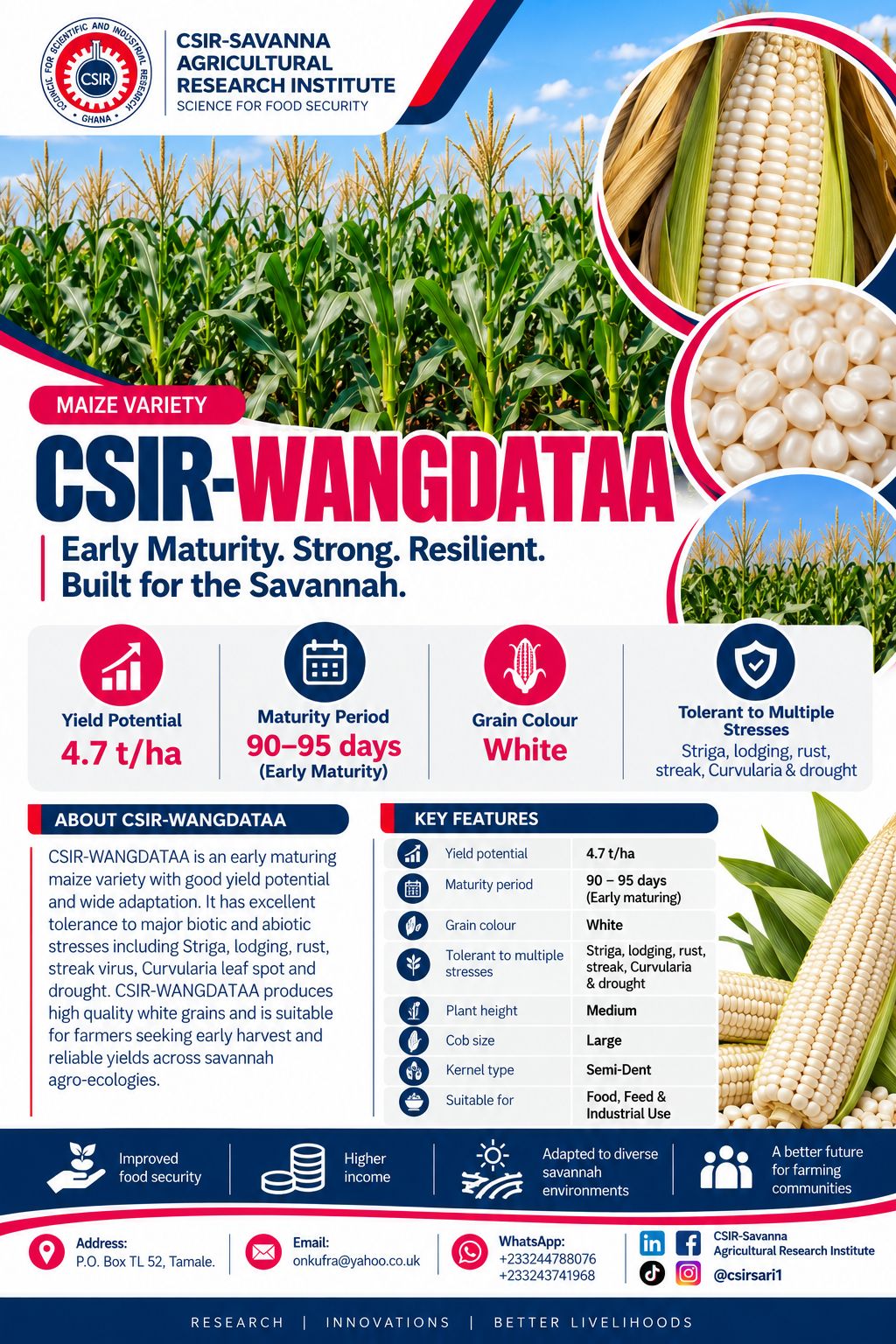
The maize study, led by Dr Ophelia Asirifi Amoako of CSIR-SARI and published in the American Journal of Plant Sciences in 2023, tested wood vinegar alone and alongside NPK fertiliser over two seasons, using CSIR-SARI’s 90-day maize variety Wang Dataa.
The full recommended rate of NPK gave the highest grain yield, about 4.96 tonnes per hectare. However, combining wood vinegar with only half the NPK rate gave statistically similar yields of about 4.6 to 4.9 tonnes per hectare, and returned more for every unit invested than fertiliser alone.
Wood vinegar on its own raised yields well above the unfertilised plots but fell clearly short of the fertilised treatments. The researchers concluded that it works best as a complement to mineral fertiliser on the nutrient-poor soils of the Guinea savanna, not as a replacement.
Cutting input costs for smallholders
Rising fertiliser prices and declining soil fertility remain major constraints for farmers in northern Ghana. The findings suggest that, used correctly, wood vinegar could help farmers stretch their fertiliser budget while improving the biological health of their soils.
The researchers stress that results varied between seasons and soils, and that further on-farm testing is needed before firm recommendations are made across different farming conditions.
Both studies were funded in part by HJA Africa, the Ghanaian company that produces Organic Farming Aid. The cowpea study also received support from the Bill & Melinda Gates Foundation through IITA and ICRISAT under the AVISA project.
CSIR-SARI continues to test soil fertility technologies, from enhanced efficiency fertilisers to organic amendments, to help farmers in the savanna zone grow more at lower cost.
The studies: Akley E.K. et al. (2023), “Wood Vinegar Promotes Soil Health and the Productivity of Cowpea”, Agronomy 13(10), 2497, doi:10.3390/agronomy13102497. Amoako O.A. et al. (2023), “Effect of Combined Application of Organic Farming Aid (OFA) and Inorganic Fertilizers on the Growth and Yield of Maize and Soil Microbial Properties in the Guinea Savannah Agro-Ecological Zone of Ghana”, American Journal of Plant Sciences 14, 1180–1206, doi:10.4236/ajps.2023.1410080.
Adapted from a report by MyJoyOnline, with details from the published studies.
Leave a Reply