
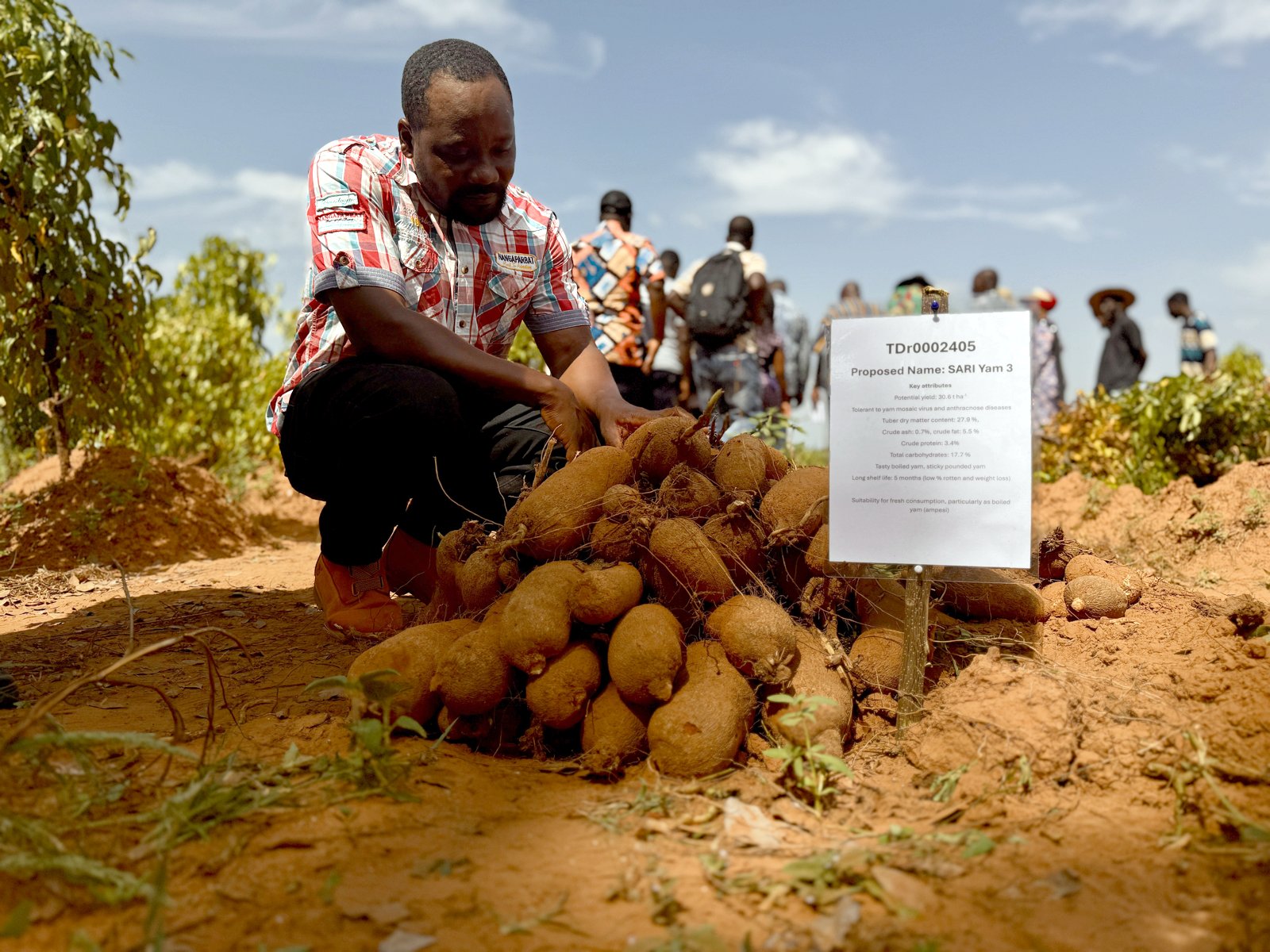
Nyankpala, Nov. 6 – Four yam genotypes developed by the Council for Scientific and Industrial Research–Savanna Agricultural Research Institute (CSIR-SARI) have received conditional approval from the National Variety Release Committee, marking a significant step towards expanding the range of improved yam varieties available to farmers in Ghana.
The genotypes, designated SARI-Yam 1, SARI-Yam 2, SARI-Yam 3 and SARI-Yam 4, also known as SARI-Chamba, were subjected to technical scrutiny as part of the variety evaluation and release process.
The assessment considered their potential agronomic performance, tuber characteristics, disease response, maturity and market suitability, among other factors relevant to farmers, traders and consumers.

The development contributes to efforts to improve yam productivity, diversify planting materials and provide farmers with varieties suited to different production conditions and market preferences.
One of the genotypes, SARI-Yam 3, produces multiple tubers with smooth skin, a characteristic that could be attractive in markets where tuber appearance influences consumer preference. It was also reported to show tolerance to yam mosaic virus and yam anthracnose, two diseases that can affect yam production.
The technical discussions also highlighted differences in tuber characteristics and potential end uses among the genotypes. SARI-Yam 1, for example, was noted for its high dry matter content, a characteristic that is relevant to consumer preferences and processing applications.
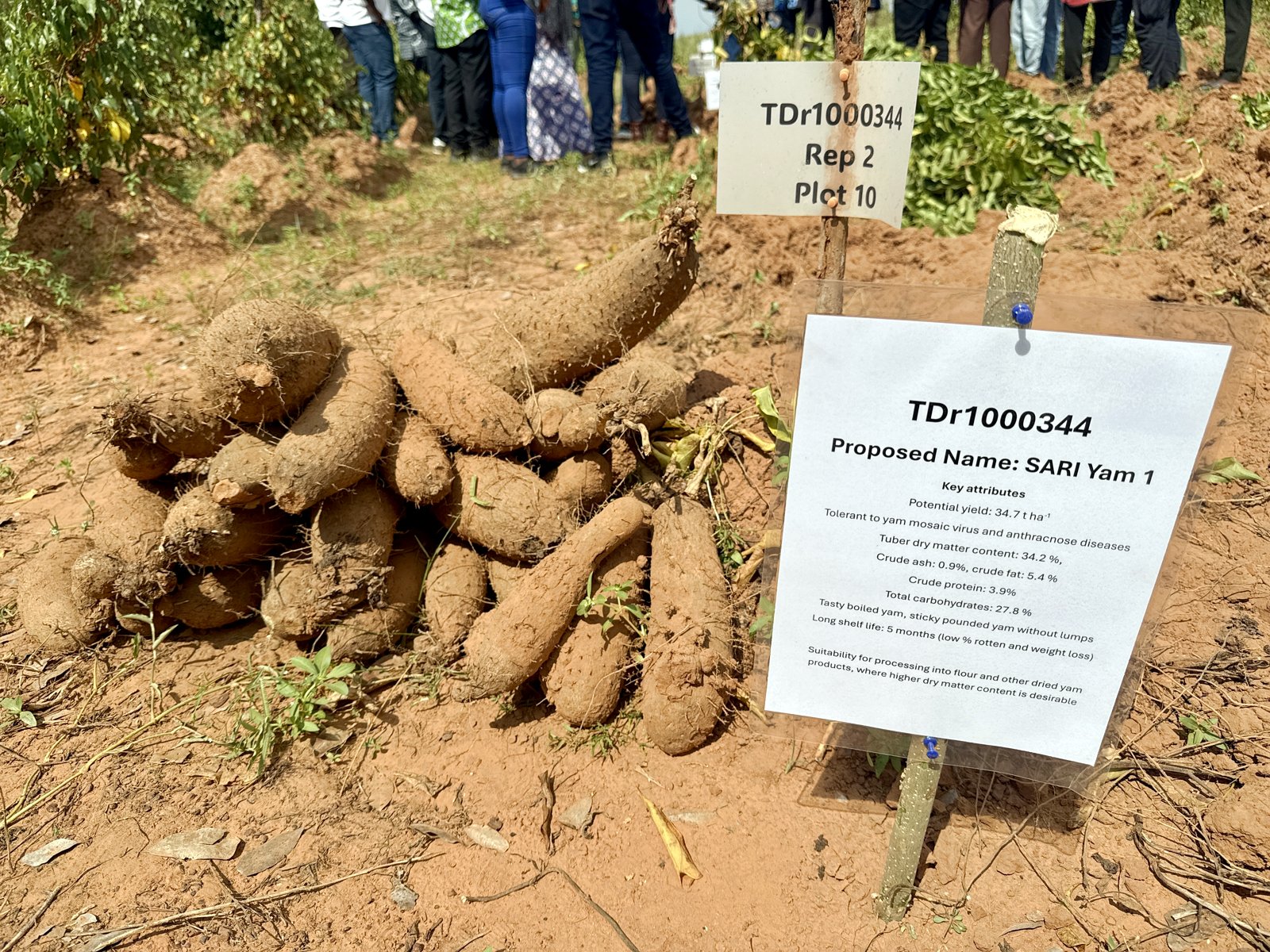
The evaluation further considered maturity and tuber development, with implications for farmers’ planting schedules, harvesting decisions and production planning. Such characteristics are important in helping farmers align yam production with local growing conditions and market demand.
Storage performance emerged as another important consideration, particularly the need to establish how long the tubers could be stored while maintaining acceptable quality. The discussions underscored the importance of distinguishing between the period tubers remain physically stored and the period they retain the quality required for consumption or marketing.
The committee also examined the need for clear production recommendations, including appropriate geographical areas of adaptation, management requirements and other agronomic practices that could support the effective use of the genotypes.

For CSIR-SARI, the progress reflects ongoing efforts to develop and evaluate improved crop varieties that respond to the needs of smallholder farmers and other actors in Ghana’s agricultural value chains.
Yam is an important food and cash crop in Ghana, supporting household food security, rural livelihoods and trade. The advancement of the four genotypes could broaden future options for farmers.
By Wilhelm Nomu Kutah
Leave a Reply