
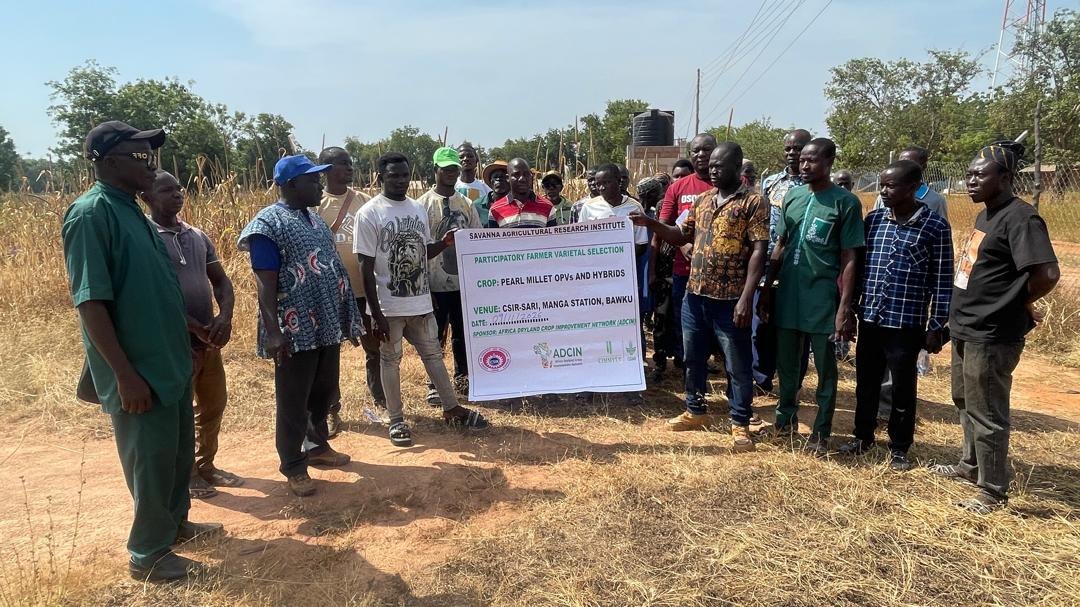
Manga, Nov. 13 – The CSIR-Savanna Agricultural Research Institute (CSIR-SARI) is working to bring pearl millet back into farmers’ fields in the Upper East Region and northern Ghana, where production of the crop has been falling.
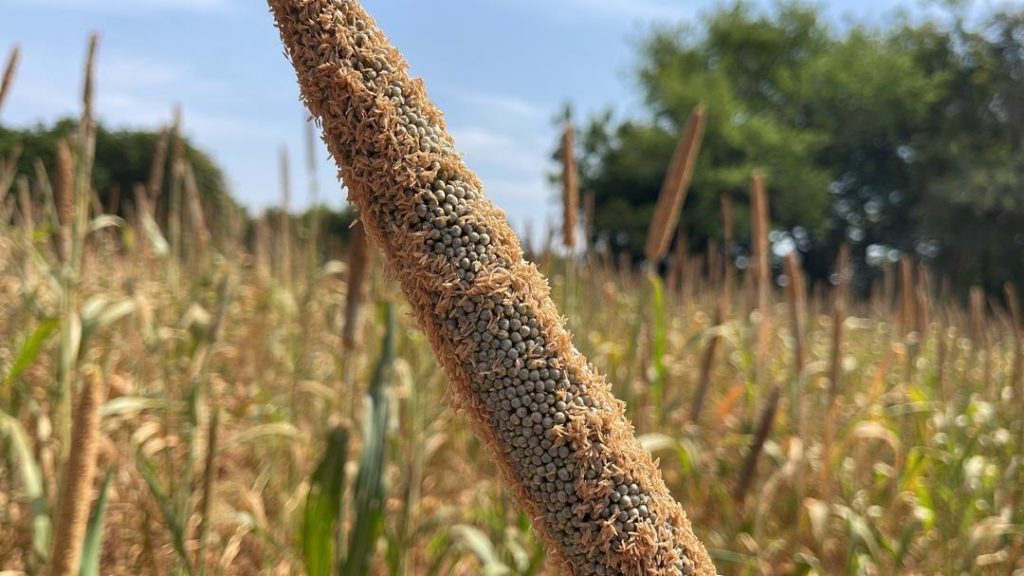
At its Manga Research Station in the Bawku Municipality, the Institute introduced farmers to improved open-pollinated varieties (OPVs) and hybrid pearl millet varieties that yield more, mature early and cope better with a changing climate.
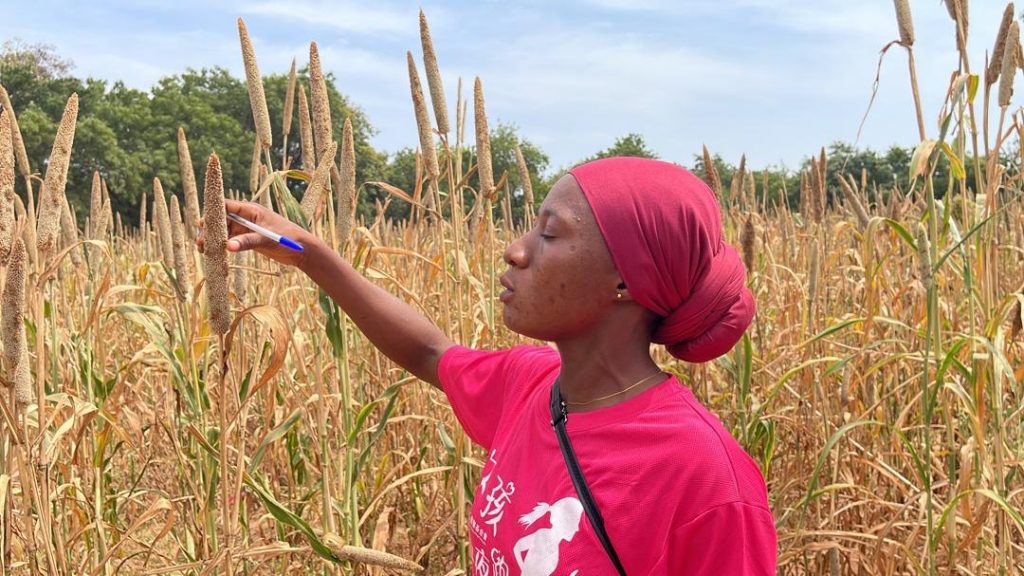
The varieties were presented during a participatory varietal selection exercise for 54 farmers from the Bawku Municipality and the Binduri, Tempane and Pusiga districts. Farmers walked through regional trials of about 30 hybrids, assessed them in the field and each selected their five preferred varieties.
The exercise was sponsored by the International Maize and Wheat Improvement Center (CIMMYT) through the Africa Dryland Crops Improvement Network (ADCIN).
Higher yields in a shorter season
Dr Peter Asungre, Pearl Millet Breeder at CSIR-SARI, said the Institute wants farmers to choose between improved OPVs and hybrids according to their own preferences and production needs.
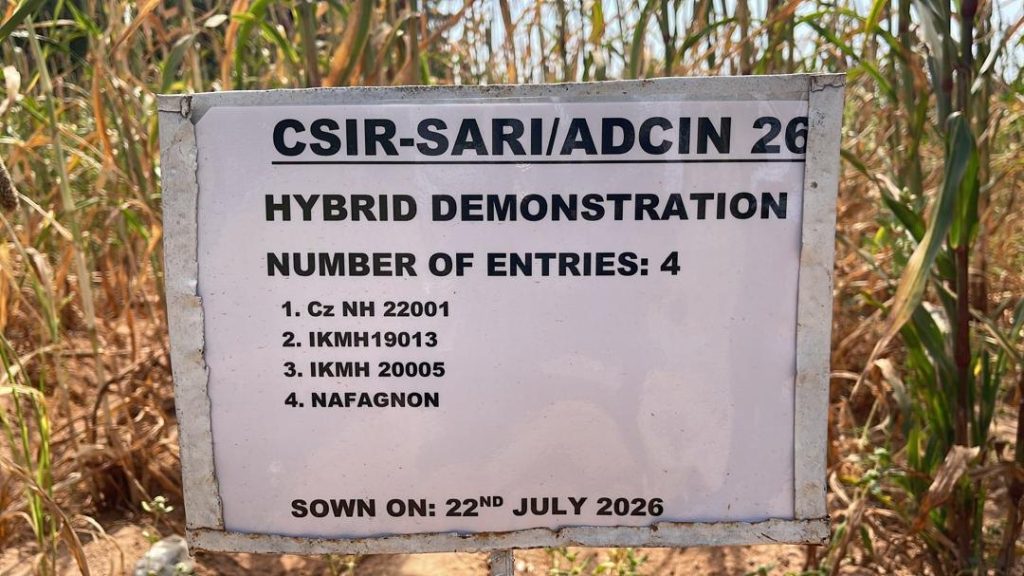
He said some of the hybrids yield up to 3.5 tonnes per hectare, compared with about 2.1 tonnes per hectare for the existing improved OPVs, and need no more fertiliser than farmers already apply to OPVs. Four hybrids are now in the release process, and the farmers’ assessments will help inform which are released.
Dr Asungre described the hybrids as promising for their higher yield potential and nutritional value. They are rich in micronutrients that can benefit children and breastfeeding mothers, and are being tested for resistance to downy mildew under local conditions.
Early-maturing varieties can be harvested in 75 to 80 days, making them climate-smart options. Pearl millet generally needs about 400 to 500 millimetres of well-distributed rain in the growing season. Dr Asungre said the demonstration showed that millet planted as late as August can still mature by November, contrary to a common belief among farmers, and advised farmers to time planting to reduce bird damage.
Farmers impressed
Mr Alhassan Salu, a farmer from the Tempane District, said the hybrids gave higher yields, bigger stalks and better traits than the traditional seed farmers have long used.
Madam Awini Lamisi Charity, also from Tempane, said the varieties matured early, yielded well and appeared able to withstand harsh weather and bird attacks.
Mr Abanga Emmanuel, a farmer from the Bawku Municipality, thanked CSIR-SARI for involving farmers in the selection and said high-yielding varieties could strengthen farm businesses and food security.
Scaling up in 2027
CSIR-SARI has run hybrid and OPV pearl millet trials in the Upper East, Upper West and parts of the North East regions. With ADCIN support, the Institute plans to extend demonstrations to other parts of northern Ghana in 2027.
Adapted from a report by A1 Radio, Bolgatanga.
Leave a Reply