
← All Technology Park technologies
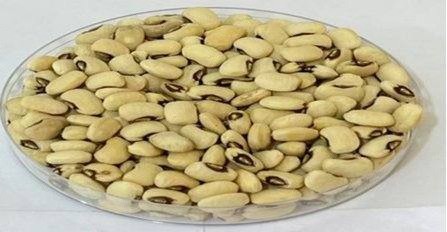
CowpeaImproved varieties
High yield (2.5 t/ha), early maturity (62-65 days) dual-purpose cowpea with natural Aphid and Striga resistance.
Key traits
| Yield Potential | 2.5 t/ha |
| Early Maturity | 62 – 65 Days |
| Crop Utility | Dual Purpose (Grain & Fodder) |
| Aphid Resistance | Resistant to Aphids |
| Striga Resistance | Resistant to Striga |
| Drought Tolerance | High |
Suited to: Guinea Savanna, Sudan Savanna, Savanna-Transition
Planted in the park: 06/08/2026
Production guide
- Land Preparation (May – July). Till land thoroughly to create an uncompacted seedbed for rapid early root establishment and nodulation.
Plough to 15-20cm depth; Form ridges or plant on flat in well-drained sandy loam soil. - Seed Dressing & Inoculation (At planting). Use certified Wang-Kae seed dressed with Apron Star. Inoculate with SARI Biofix Rhizobium for high biological nitrogen fixation.
Mix 100g Biofix with 10kg seed with sugar sticker in shade; Do not expose inoculated seed to sunlight. - Planting Date & Spacing (Planting Date: 06/08/2026). Plant at 60cm between rows and 20cm between hills, 2 seeds per hill, thinning to 1 plant per hill at 10 days.
Row spacing: 60 cm; Plant-to-plant: 20 cm; Seed rate: 20 – 25 kg/ha. - Fertility & Crop Nutrition (10 – 14 Days After Planting). Apply Triple Superphosphate (TSP) or 0-20-20 at 30kg P2O5/ha. Wang-Kae’s high biomass requires adequate phosphorus for dual grain and fodder growth.
Side-dress phosphorus fertilizer along plant rows; Hand weed at 3 weeks to prevent early weed competition. - Integrated Pest Management (Vegetative to Podding). Wang-Kae provides natural resistance to aphids. Scout during pod initiation and apply targeted control for pod borers or pod-sucking bugs as needed.
Leverage innate aphid resistance to eliminate early vegetative insecticide sprays; Spray at 50% podding if pod borer pressure exceeds threshold. - Dual Grain & Fodder Harvest (62 – 65 Days After Planting). Harvest mature dry pods for grain. Immediately cut and bundle green haulms/vines and dry them under shade for premium livestock fodder.
Pick dry pods when 85% straw-colored; Cure green haulm residues on racks in shade to preserve protein content for dry-season feeding. - Threshing & PICS Storage (Postharvest). Thresh grain with SARI motorized thresher and store in hermetic PICS bags. Store baled fodder in dry, ventilated shed.
Store clean grain at <11% moisture in PICS bags; Store baled haulms off ground for ruminant sheep/cattle feed.
Find it in the park
- Plot
- Plot D-03 – Dual-Purpose Legume & Forage Demonstration Field
- Location
- Adjacent to the Animal Husbandry & Forage Demonstration Unit
- Signboard code
- SARI-TP-CP-03
 Lead scientistDr. Francis KusiDirector