
← All Technology Park technologies
GroundnutImproved varieties
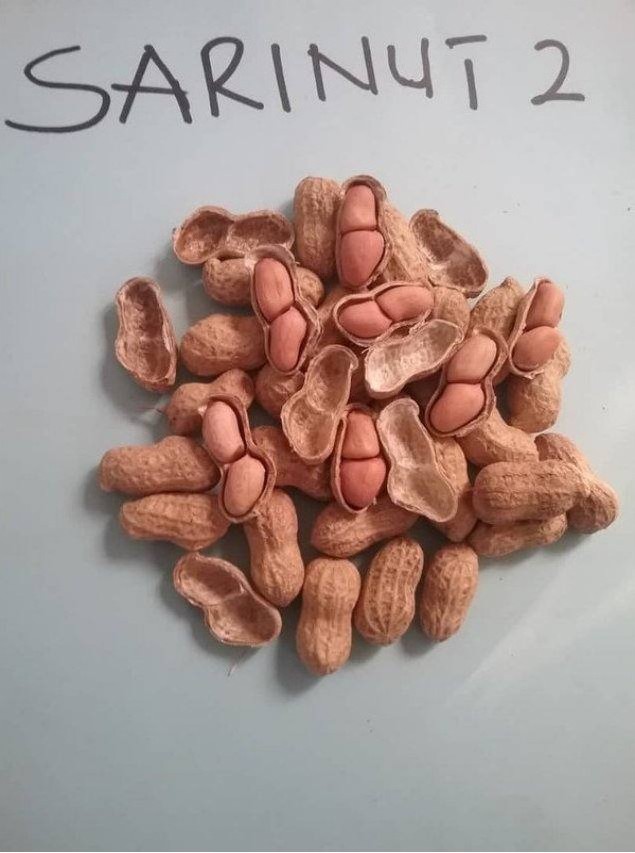
Potential yield 2.4 t/ha, early maturity groundnut with tolerance to leaf spots, excellent fodder, and high oil content.
Key traits
| Potential Yield | 2.4 t/ha |
| Maturity Period | Early Maturity |
| Disease Tolerance | Tolerant to both Early & Late Leaf Spot Diseases |
| Livestock Fodder | Excellent Source of Fodder |
| Oil Yield | Excellent source of Oil |
Suited to: Guinea Savanna, Sudan Savanna, Forest-Savanna Transition
Planted in the park: 22/06/2026
Production guide
- Land Preparation & Ridge Formation (Early June). Plough and harrow to create a friable, well-aerated seedbed. Construct ridges 50cm to 60cm apart for optimal pod penetration and easy lifting.
Ensure loose soil texture for pegging; Incorporate well-cured compost or single superphosphate (SSP) if required. - Seed Treatment & Planting (Planting Date: 22/06/2026). Plant on 22/06/2026 using certified SARINUT 2 seed dressed with fungicide (e.g. Apron Star). Plant at 50cm between rows and 15cm between plants at 3-4cm depth.
Seeding rate: 25 – 30 kg/ha shelled seed; Plant into moist seedbed to ensure uniform germination. - Weed Management & Earthing Up (2 – 4 Weeks After Planting). Perform early manual weeding before flowering and pegging. Earth up loose soil around plant crowns to facilitate peg entry into soil.
Avoid hoeing once pegging begins to protect young subterranean pods; Hand pull any late emergent weeds. - Harvesting & Fodder Preservation (Early Maturity Harvest). Harvest when the inner pod wall turns deep brown/black. Carefully lift whole plants, shake off soil, and cure haulms for nutritious dry-season livestock feed.
Invert harvested plants to dry pods in the sun for 3-5 days; Separate haulms and store under shade to retain green fodder quality. - Solar Drying & Storage (Postharvest). Pluck pods and sun-dry on clean tarpaulins to below 8-9% moisture to prevent aflatoxin contamination. Store in clean bags on wooden pallets.
Sort and remove moldy or damaged pods; Use hermetic bags or well-aerated jute bags.
Find it in the park
- Plot
- Plot D-20 – Groundnut Demonstration Plot – SARINUT 2
- Location
- Central Legume Field block, adjacent to Songotra-T cowpea
- Signboard code
- SARI-TP-GN-11
 Lead scientistDr. Richard Oteng-FrimpongGroundnut Breeder