
Moshie-Daboro (U/E), Oct. 31 – Five improved maize hybrids from the CSIR-Savanna Agricultural Research Institute (CSIR-SARI) have held up well through late planting and a dry growing season at Moshie-Daboro in the Bongo District of the Upper East Region, winning praise from farmers at a demonstration field day.
The field day was organised by CSIR-SARI with the African Agricultural Technology Foundation (AATF) under the Maize Compact of the Technologies for African Agricultural Transformation Phase II (TAAT II).
Smallholder and commercial farmers, agricultural extension agents, input dealers and CSIR-SARI researchers walked through the plots to judge how the hybrids performed under local conditions.
Five hybrids on show
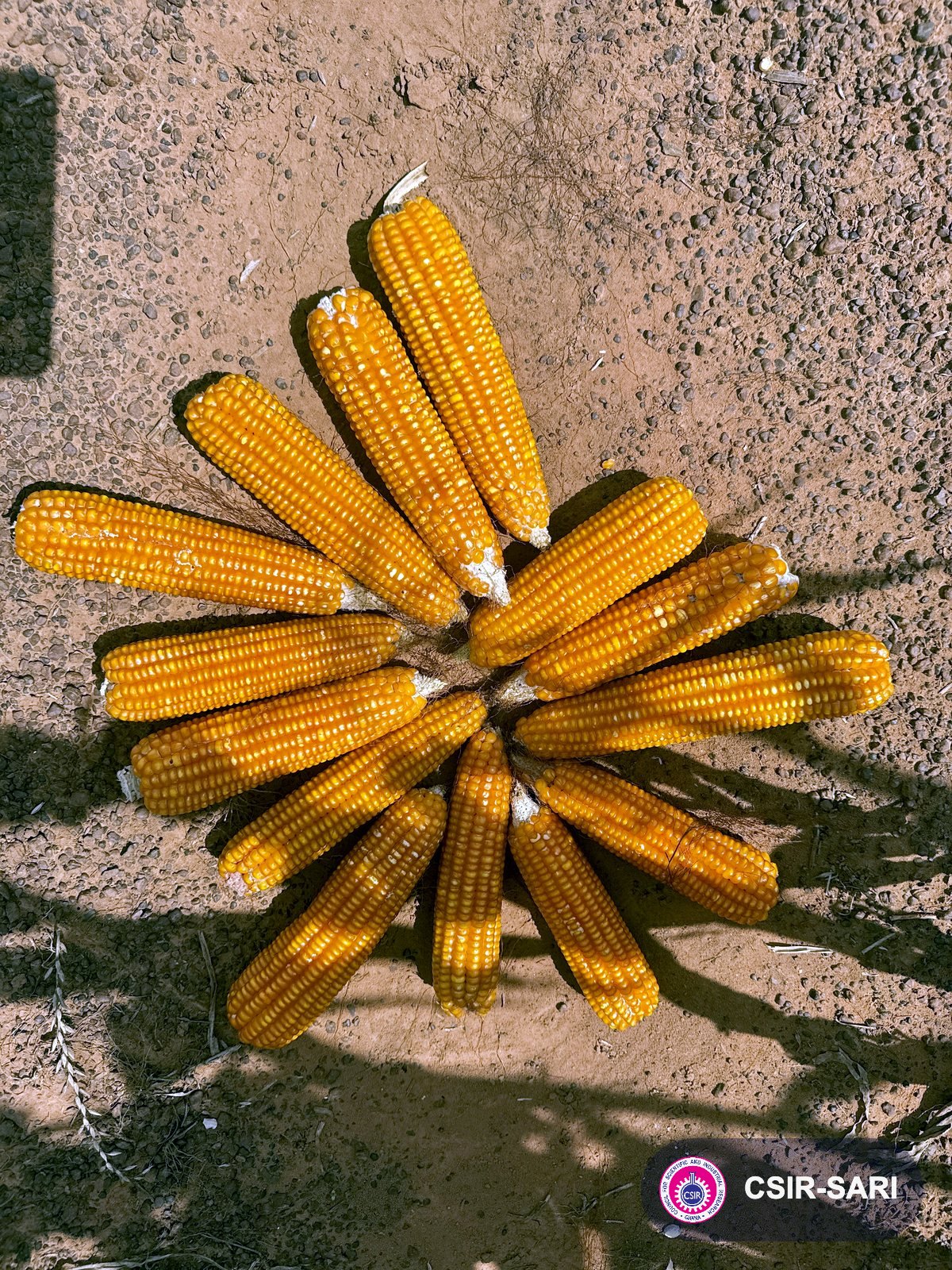
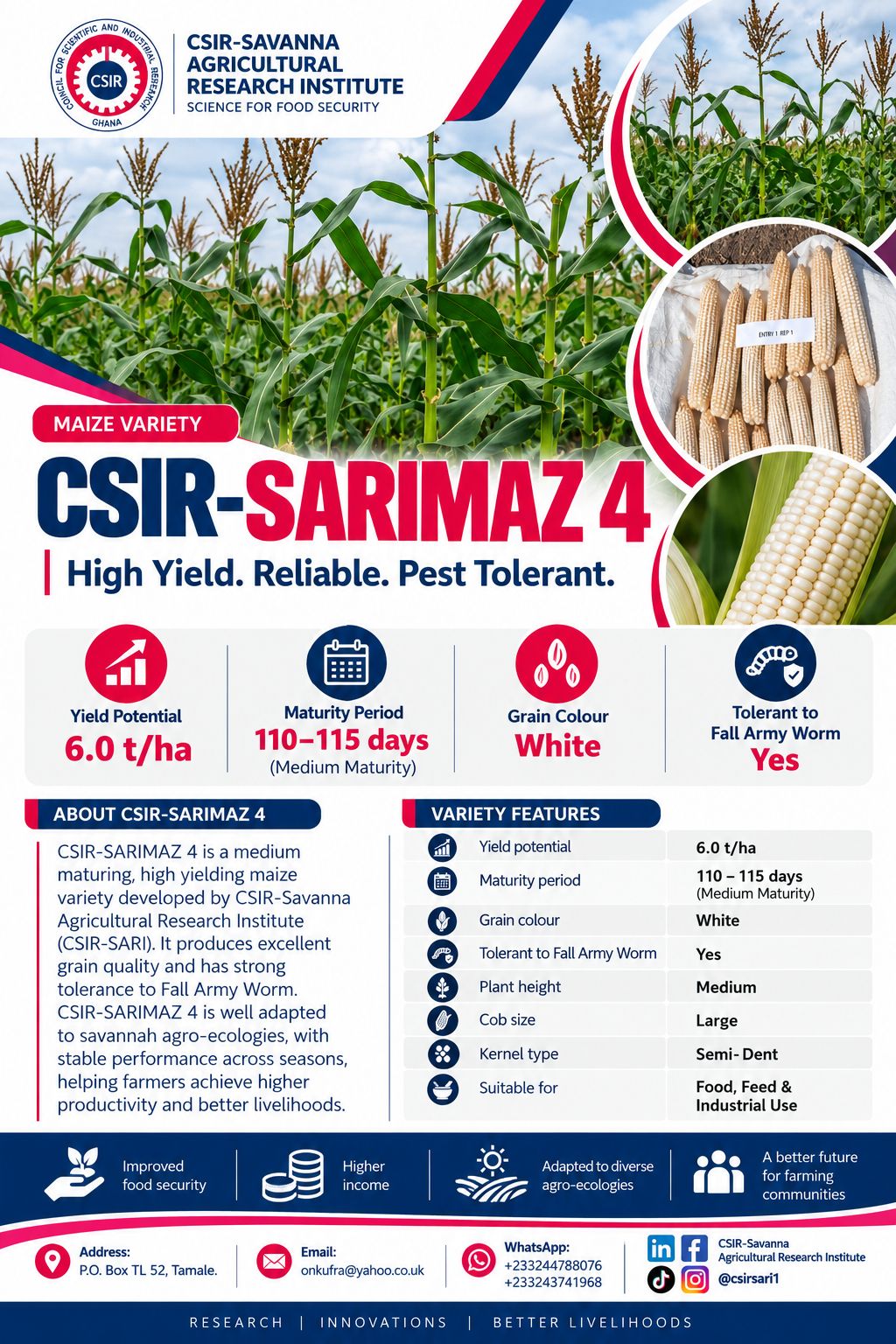
The demonstration featured two white maize hybrids already released for cultivation, CSIR-SARIMAZ 4 and CSIR-SARIMAZ 5, and three promising yellow hybrids, LY1409, LY2205 and EPVAH-34.
The yellow hybrids come out of CSIR-SARI’s biofortification breeding programme and are rich in provitamin A, iron and zinc, nutrients that support growth, immunity, vision and general health.
The plots were sown in late July 2026 on land that farmers normally use for groundnut. Despite the late start, erratic rainfall and long dry spells, the hybrids performed encouragingly compared with other maize varieties grown in the community.
Standing up to pests, Striga and drought
Dr Isaac Kodzo Amegbor, Maize Breeder at CSIR-SARI and TAAT II Maize Compact Lead for Ghana, said CSIR-SARIMAZ 4 and CSIR-SARIMAZ 5 showed strong tolerance to fall armyworm, keeping good growth and productivity under the pest pressure seen on the plots.
He urged farmers to combine improved seed with good agronomic practices and proper post-harvest management to get the full benefit of the varieties.
Dr Desmond Sunday Adogoba, Innovation Scaling Specialist at CSIR-SARI, said the field day was meant to show farmers technologies that tackle both low yields and poor nutrition.
He noted that the hybrids withstood moisture stress, Striga and fall armyworm damage, three of the biggest threats to maize production across northern Ghana.
Tackling hidden hunger
Dr Adogoba explained that many low-income rural households struggle to afford varied diets with enough vitamins and minerals. Building provitamin A, iron and zinc into a staple like maize, he said, offers an affordable and sustainable way to improve what families eat, especially women and children.
Biofortified maize could therefore complement existing nutrition programmes in rural communities.
Farmers ready to adopt
Ms Alayine Grace, a lead farmer at Moshie-Daboro, said the hybrids’ performance had convinced farmers to take them up and expand cultivation once they are officially released.
Ms Abaabagre Halimatu, another farmer, said she was especially drawn to the nutritional benefits, which she hoped would help women in rural communities during pregnancy and after childbirth.
Mr Andrews Atampugre, an Agricultural Extension Officer with International Development Enterprises (iDE), who helped establish the plots, said the demonstration let farmers compare the hybrids directly with their own varieties under real conditions. He encouraged them to pair improved seed with recommended crop management to raise yields and reduce the risks of a changing climate.
Beyond improved seed, the TAAT II Maize Compact promotes good agronomic practices, correct fertiliser use, integrated pest and weed management, and better post-harvest handling and storage.
Adapted from a report by the Ghana News Agency (GNA).
Leave a Reply